Hiking
 Sailing
 Fishing
 Cycling
 Visit attractions
Organization
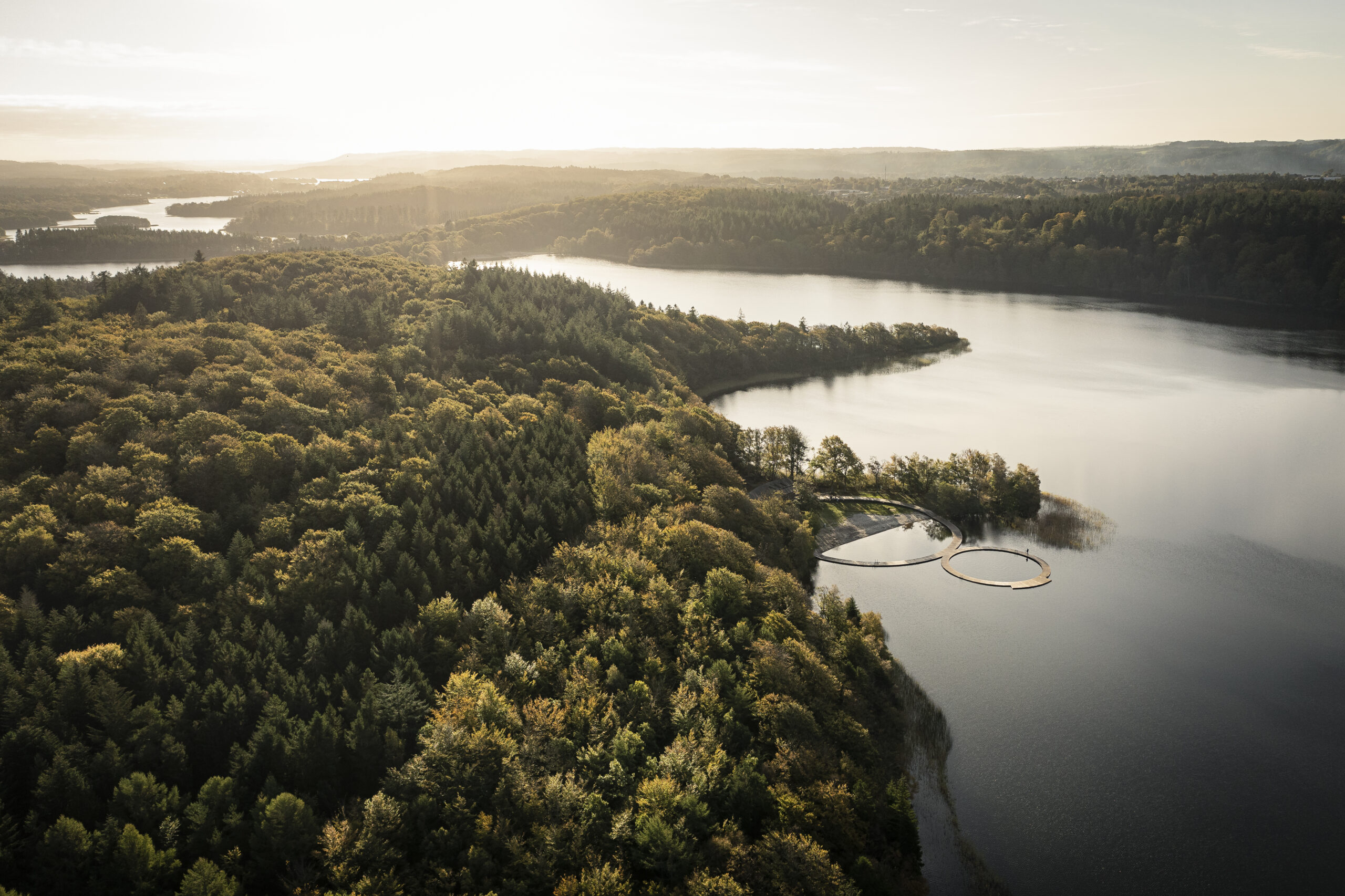
The Gudenå Collaboration’s political steering committee consists of the mayors of the seven municipalities; the administrative steering committee is a forum composed of the municipal managers of the seven municipalities.
The daily work is carried out by a full-time coordinator supported by a professional steering committee consisting of
- Heidi Baltzer, Hedensted Municipality
- Jeppe Madsen, Horsens Municipality
- Hanne Baastrup, Skanderborg Municipality
- Anita Niebuhr Hyldgaard, Silkeborg Municipality
- Thomas C. Andersen, Viborg Municipality
- Tobias Fuglsbjerg Aakjær, Favrskov Municipality
- Karsten Boddum-Olesen, Randers Municipality
Since 2021, the Gudenå Cooperation secretariat has been located in the municipality of Favrskov. From 2016 to 2018, the secretariat was located in Silkeborg, and from January 1, 2019, to February 1, 2021, it was located in Skanderborg. Following the pilot project, the secretariat will in all likelihood be moved to one of the other Gudenå municipalities.
________________________________________
________________________________________
GudenåSamarbejdets aktiviteter
GudenåSamarbejdet
- har initieret og understøttet projektet “Gudenåstien – fra kilde til fjord” – læs mere om projektet her
- har udgivet podcasten “Åsteder – fortællinger fra Gudenåen”, der kan findes på Itunes, Podbean og på oplevgudenaa.dk/podcast
- driver facebooksiden Gudenåen
- og hjemmesiden oplevgudenaa.dk
- og det digitale kort, kort.oplevgudenaa.dk
- holder møder for erhverv, der bruger Gudenåen i sin forretning – se mere her.
- koordinerer og faciliterer med henblik på øget tilgængelighed og synlighed af Gudenåens og oplandets oplevelsesmuligheder
- samarbejder med Destination Kystlandet, Danmarks Smukkeste og VisitAarhus – samt Naturstyrelsens tre Gudenå-enheder
- har sat skilte på alle broer og overbæringssteder over Gudenåens hovedløb samt ind til alle teltpladser – se nyhedsartikel hos TVSyd (2017)
- samarbejder med Gudenåkomitéen om Gudenåplanen
- har samarbejdet med de tidligere turistorganisationer om opgradering og nye beskrivelser af de regionale cykelruter 29, 30, 31 og 33
- har udarbejdet supplerende Notat om turismepotentialet ved etablering af omløbsstryg ved Tange Sø på anmodning fra de 4 nordlige kommuners borgmestre .Se notat om turismepotentiale (2018)
________________________________________
Terms of Reference for the Gudenå Collaboration
Silkeborg Municipality / Analysis & Development May 20, 2015 / Minor changes added on June 9, 2015
PROPOSAL FOR AN UPDATED GUDENÅ COLLABORATION: TASKS AND ORGANIZATION
Assignment:
Mayors and municipal directors from the seven Gudenå municipalities discussed the future organization of efforts to realize the Gudenå River’s growth potential at a meeting on May 5. Following the meeting, the reports and discussions were compiled into a memo, which the group of municipal administrators subsequently commented on. These comments have been incorporated into this revised proposal, which is now being sent to the municipalities for a political decision.
The meeting revealed broad consensus that the Gudenå River has potential that could be better utilized.
The Gudenå River’s opportunities and the efforts of various stakeholders to develop them are not particularly visible and do not work in concert.
The Initial Situation:
The various stakeholders—namely, the individual municipalities, the Gudenå Committee, VisitGudenåen, the local tourism organizations, OplevGudenåen / the Danish Nature Agency, the Gudenå Collaboration, and others—largely set their own agendas and organizational structures without any coordination.
As a result, it can be difficult to get a clear picture of what the work actually entails, and the specific initiatives “pull in different directions” without a clear strategic focus, with an unclear and at times unrealistic level of ambition. Several initiatives operate on a temporary grant but still have their own organization, project manager, logo, and communication platform.
Finally, there is only limited interaction with business and commercial forces, such as
, which could contribute investments that might enhance the area’s appeal and the range of experiences it offers.
Considerations Regarding Future Cooperation on the Gudenå River:
Against this backdrop, the mayors agree that there is a need to simplify and focus
the work on developing the Gudenå River. The work should also focus more on providing residents with opportunities to use the Gudenå River and its associated trails, facilities, and amenities in their daily lives.
The Gudenå River’s growth potential cannot stand alone. The river is part of the region’s overall potential to leverage outdoor recreation, nature experiences, cultural history, and more in the context of growth, and must therefore be integrated into a broader strategic framework related to tourism and business development.
Nor does the Gudenå River’s growth potential have the scale and strength to justify the formation of an independent company
; however, there is a clear need for a stronger, joint political focus on the challenges and opportunities related to the Gudenå River across municipal boundaries.
This should be achieved by moving the Gudenå Collaboration out of the Gudenå Committee and into a
mayors’ forum for the Gudenå municipalities. This forum, supported by a directors’ forum, will meet as needed to take stock of the situation, decide on new initiatives, address matters of principle concerning the Gudenå River, etc.
It is assumed that the updated Gudenå Collaboration will fully replace the existing Gudenå Collaboration under the auspices of the Gudenå Committee. The Gudenå Committee will thus transfer its current development tasks—including those related to the Comprehensive Plan—to the new Gudenå Partnership.
The Gudenå Committee will thus continue its work in carrying out regulatory and other tasks related to water plans, water quality, etc., but in closer coordination with the overarching decisions regarding the use of the Gudenå River. Solutions to the long-standing challenges regarding water levels in the river, flooding, weed cutting, regulation of navigation, the river’s course/passage at the Tangeværket, etc., have an impact on the realization of the positive potential in terms of opportunities:
- to live near the stream in scenic surroundings,
- to get around and experience the stream up close and as a continuous whole, e.g.,
trail systems that don’t suddenly end because of a municipal boundary, - for nature experiences and active vacations combined with city life and cultural experiences, etc.
When launching new initiatives, the mayors will place special emphasis on
opportunities to apply for grant funding. The Gudenå Comprehensive Plan, which includes three priority areas—recreational fishing tourism, cultural history, and trail systems—is one component of the foundation for work on larger projects for which grant funding can be sought.
“Discover the Gudenå” is also an active player that, through partnerships and grant funding, has
established a number of new facilities and is currently working on new projects and grant applications.
Specification of Areas of Work and Stakeholders
The work on the Gudenå River’s potential can be described as three tracks:
1. The Gudenå River and the Residents:
It should be easier for both current residents and newcomers to discover and use
the Gudenå River in their daily lives for recreation, exercise, experiences, etc. This calls for:
- Operation of trails and other facilities, and a plan for further investments
- Simple and accessible presentation of opportunities for life, activities, and experiences—including consistent, recognizable, and simple map materials that all stakeholders can use
on existing platforms - Involving commercial, cultural, and other stakeholders in the co-creation of
services, activities, events, etc.
2. The Gudenå River and Tourism:
There needs to be more to offer visitors seeking outdoor activities, nature experiences,
cultural history, and more. This requires, among other things:
- Promoting and marketing trails, facilities, experiences, activities, events,
, and more on common platforms where tourists seek information—including simple and
consistent maps in multiple languages - Packages featuring services, activities, and more that combine the opportunities offered by the Gudenå River
with other attractions and experiences in the area. The primary
contributors and stakeholders are relevant business entities
3. The Gudenå River and Business Development:
One factor contributing to the appeal of a natural area—both for everyday life and for vacations
—is the availability of food, beverages, activities, transportation, experiences, and more. This can be facilitated
through a clearer strategic focus on:
- Nature as the Foundation for Business—New Jobs and Business Opportunities
- The Gudenå River in the context of other opportunities for experiences and activities in the natural environment of the “
,” such as coastal tourism and the “blue-green belt” in East Jutland
The concrete and practical work related to these three tracks can, to a large extent, be carried out by
existing organizations and resources:
- Municipal Development Units: Establish a network at the administrative level to continue the Gudenå collaboration and assign a project staff member to raise awareness, create coherence, and bring the Gudenå River into strategic forums. The network can be expanded on an ad hoc or permanent basis to include, for example, the municipalities’ environmental departments and the Danish Nature Agency, depending on the initiatives and projects underway.
- The local tourism organizations—including their use of the results from the VisitGudenåen project, which will be winding down in 2015. The new project staff member will, in close collaboration with the local tourism organizations, continue to develop and utilize products, brochures, relationships, and more from VisitGudenåen’s additional sales project. In addition, the staff member will provide information, stories, and other materials to the tourism organizations, which, in turn, can provide information relevant to residents to the municipal network.
- Business Region Aarhus (BRA), which, in its work on tourism development in East Jutland, places a special focus on developing the blue-green belt, of which the Gudenå River is an important part. In this context, an assessment must be made of what the “Gudenå Comprehensive Plan” can contribute to the longer-term efforts regarding the Gudenå River within the blue-green belt. This also requires an agreement regarding Viborg Municipality’s participation in tourism-related efforts under the auspices of BRA.
Economy
A proposed annual budget for such a more network-based Gudenå collaboration could be:
Gudenå Collaboration – Network Model
- Payroll expenses, etc. 650,000
- Meetings, networking events, study trip 50,000
- “Brochures, maps, and other simple materials” 75,000
- Miscellaneous 75,000
- Contribution to BRA: 200,000
Total: 1,100,000
Funding may be allocated according to a formula that takes into account both the municipality’s
population and the significance of the Gudenå River to the municipality in question. The seven municipalities
are proposed to be divided into the following three categories:
Category 1: “A large population and the Gudenå River are of great importance”: The municipalities of Silkeborg and Randers, with an annual contribution of 250,000 DKK per municipality
Category 2: “Large population and the Gudenå River is of minor importance” or “Smaller population and the Gudenå River is of great importance”: the municipalities of Horsens, Viborg, and Skanderborg, with an annual contribution of 150,000 DKK per municipality.
Category 3: “Fewer residents and the Gudenå River is less significant”: The municipalities of Favrskov and Hedensted, with an annual contribution of 75,000 kr. per municipality.
Summary:
The recommendations can be summarized as follows:
- The overarching and coordinating Gudenå collaboration on development and the realization of potential will be transferred from the Gudenå Committee and will henceforth be managed by a mayors’ forum that meets as needed. Between meetings, a directors’ forum will handle the overall work.
- The development efforts focus on the Gudenå River in three areas: residents, tourists, and business development.
- The practical coordination work is carried out by an administrative development network consisting of development managers and development staff, along with a full-time project staff member whose role is to raise awareness and ensure consistency regarding activities, offerings, and opportunities related to the Gudenå River. The staff member is also responsible for integrating the Gudenå River into strategic frameworks by actively participating in, among other things, the tourism efforts of BRA on behalf of the Gudenå municipalities.
- At the Mayor’s Forum meetings, the overall goals for the work across the three tracks are established. The meetings are also intended to ensure coherence between development, planning, regulatory matters, construction, and other related activities concerning the Gudenå River, including the work of the Gudenå Committee.
- No new platforms for visibility and outreach—instead, a coordinated use of existing websites operated by municipalities, visitor organizations, the Danish Nature Agency, etc.
- Based on an established allocation model, the municipalities fund the salary costs for one full-time employee at
and contribute to BRA’s work on developing the blue-green belt—in collaboration with municipalities and local visitor organizations. A total of 1.1 million DKK.
Following the mayors’ meeting, the Municipality of Silkeborg has been in dialogue with Oplev Gudenåen /
and the Danish Nature Agency, which agrees with the approach of highlighting everything we already have and placing greater emphasis on the Gudenå River’s qualities in relation to settlement. Furthermore, Oplev Gudenåen emphasizes that clearer political coordination of the work related to the Gudenå River strengthens the impact of grant applications.
In closing, it should be noted that the Gudenå Committee, at its meeting on March 6, 2015, decided that the committee’s secretariat would be permanently located in the Municipality of Silkeborg, effective January 1, 2016.
________________________________________
GudenåSamarbetet before 2016
From 2012-15, GudenåSamarbetet lived in the Gudenå Committee, which is the same 7 municipalities’ collaboration on boating regulations and the aquatic environment. GudenåSamarbetet emerged partly as a political vision for better “utilization” of the Gudenå region’s experience potential and partly as a dialogue forum for the many Gudenå initiatives – primarily OplevGudenaa and VisitGudenaa.
Read more about GudenåSamarbetet 2013-15
GudenåSamarbejdet version 1 handed over the status and recommendations to GudenåSamarbejdet version 2 in the form of a “Handover Document” that built directly on the Master Plan created during GudenåSamarbejdet 2013-15.
See the master plan for GudenåSamarbejde 2013-15
The idea was always that GudenåSamarbetet should be moved out of the nature administrations and into a more development-oriented organization.
Anchoring the Gudenå collaboration politically in a mayoral forum and administratively in the development and culture and leisure administrations was done with a view to a holistic approach to experience development in and around Gudenåen – across administrations and disciplines and through collaboration with both municipal and non-municipal actors.